|

|

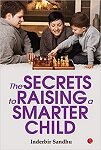
The Secrets to Raising a Smarter Child Recommended |
||||
|
Five Non-classroom Activities to Sharpen Your Children's Brain - Part IIBy Andrew Loh Past research and present studies indicate that critical thinking skills are very important for ensuring success in life. Critical thinking skills in children will not only sharpen brain but it will also help us in finding practical solutions to any type of problems that might occur in the course of life. Classroom activities do help us in developing in critical thinking skills. However, numerous activities are non-classroom in nature. One such activity is playing chess. The game of kings and the king of games Chess is an ancient board game that tests the thinking skills of a person. It is also a game for people of all ages. A ubiquitous game exists in almost all countries. Chess is a game that helps people develops critical thinking skills. The theory that surrounds chess is quite complicated. This game offers a number of brain benefits to your children and here are some of them: Development of logical thinking: Chess needs logical thinking. It also needs a player to understand logical strategy. The main goal of the game is to protect the king at any cost by using all other pieces. The basic principles of logic will help the player to play the game in such a way that he or she will not only protect the king but also try to checkmate the king of the other player. Development of imagination and creativity: The player who plays the game should be creative and imaginative. He or she should also be inventive. Chess provides the player an opportunity for the player to be a person who can visualize the future moves that the opponents might use to defeat. Development of independent thinking: Chess needs the player to take or make own decisions. This skill is a life skill that helps the children to become successful in life. Development of self-motivation: Chess demands creation of best possible strategies that beats the opponent. The strategy used will come from within the mind of the player. In other words, the player will generate the required self-motivation to create the best possible strategies and plans. Self-motivation leads to self-assurance and self-confidence. Development of scientific thinking: Chess is a game if infinite numbers of variations. It also involves usage of various ideas, hypothesis and concepts. As your children start playing chess, they will also develop the scientific temper that is so much necessary to succeed in the classroom. Music is a way of life! Another important ingredient skill that can sharpen the children brain is the artistic and creative skill. Past research suggests us that fine arts, painting, drawing, music and other similar activities will help the learner to acquire a series of skills and techniques that in combination will lead to a complete brain that is endowed with a range of abilities. Music is a superb activity that can help your children in a number of ways. Music could be a classroom activity. At the same time, it is also a non-classroom activity. Classrooms teach some form of music to children. However, it may not be enough for a child to experience its many-sided benefits. Music provides a number of benefits to your children and here are some of them: Enhanced brain activities: Music can enhance brain activities largely. Brain cells can become completely functional when children learn how to play how to sing or play musical instruments. The brains of a child that learns music could be more efficient than the one that does not. Music training can help children enhance different brain functions. Enhancing order and system in life: Children who learn music at an early age can become extremely good at organizing and conducting many activities at once. Music also teaches how to become successful in life and profession. It also helps the children acquire self-knowledge and self-expression. Development of abstract reasoning skills: Music training can help enhance abstract reasoning skills in children. Abstract reasoning is necessary for children to perform well in math and science. Development of spatial reasoning skills: Music can help children develop spatial reasoning skills that eventually lead to the development of better IQ. In other words, music can help children develop techniques to show better classroom performance and superior temporal IQ scores. Music also helps children develop self-esteem and self-image. Brain training to taste academic success The fourth important non-classroom activity to sharpen the brain functions is the brain training games. Varieties of brain games are available both in the school and in market that can help your children develop brain functions in an optimum way. Brain games can sharpen the child brain in a number of ways and benefits and here are some of them: Enhancement of working memory: Good memory is an essence to academic success. Lapses in memory can become the biggest obstacle too. Brain games will help children develop working memory. Memory could be of short term or long term in nature. Brain games can help children develop both of them. Short-term memory is necessary for immediate recalling of information on a short notice while long-term memory is essential for storage of vital bits of data for late retrieval. Enhancement of visualization: Brain games provide an opportunity to develop visualization technique. Visualization will help recall about various senses of life that can eventually help think about past, present and the future. It also helps children develop an ability to appreciate various senses of life like smells, sounds, tastes and sights. Enhancement of reasoning skills: Brain training activities will help children develop reasoning skills. The most basic aspects of life always involve questions like “why”, “how”, “where”, “what” and “when”. These inquisitive questions will help your children acquire a number of reasoning skills those are important for classroom success. Development of native IQ: Brain training games and activities will also help children develop advanced levels of native IQ that eventually leads them to perform better in classrooms. Focus and concentration as two vital parameters for success Both focus and concentration are essential for academic and personal success. Without these vital attributes, children may find it very difficult to succeed in life. There are a number of activities help children develop concentration and focus. These activities could be playing games or they could be spiritual in nature like meditation and yoga. Whatever the case, parents should try to initiate their children use a combination of such techniques to develop focus and concentration. The benefits of these activities are multi-sided and they offer a range of benefits like:
It is easy to develop focus and concentration by playing chess or musical instruments. You can teach basics of yoga and meditation as well. Extended reading and writing sessions will also help develop the power of concentration and focus. When children learn how to associate different ideas together, they will concentrate on developing a strategy to create meaning to their life. 


|


 Checkout these other child development articles

|
|