|

|

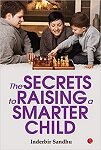
The Secrets to Raising a Smarter Child Recommended |
||||
|
What is Bodily-Kinesthetic Intelligence?By Andrew Loh One of the six basic Multiple Intelligences(MI), bodily-kinesthetic intelligence is a special concept as proposed by Dr. Howard Gardner, professor of education at Harvard University. The word "kinesthetic" derives its meaning from another technical term called "Kinesthesia" which means a sense for any movement. In other words, it also refers to a keen awareness for perceptible changes in our body momentum, balance, position and stationary presence. With this sense, we can easily know how our bodies and their components are moving in a perfect balance. Three of the most significant aspects of kinesthetic intelligence include:
Just watch a child who is always on the move. That child may even move his body while studying or watching TV programs. In fact, such a child looks tremendously energetic and exciting. For this child, moving around is a primary objective. If not moving, the next best thing he or she does is to fiddle around seats by moving arms and feet. In fact, these activities help children concentrate better! Gardner, in his treatise on this type of intelligence, opines that children who possess this intelligence have a beautiful sense of timing, a great inkling to achieve meaningful physical action and an impeccable ability to maneuver their responses to convert them into immediate reflexes. In other words, children who possess such intelligence have a very high degree of motor control and an ability to use body motions to generate energy and concentration. In our culture, people believe that such intelligence does not exist as they think those children who are physically active and agile as public nuisance. However, Gardner believes that bodily-kinesthetic intelligence is a hidden gift for many children because it helps them in learning in a practical sense. Gardner also believes that this intelligence has its origin in the body itself. Some of the examples he mentions are as follow:
In fact, all human emotions take their origin from a hidden kinesthetic experience. Just think of all those emotions and experience that arise when you read an excellent novel. It could be emotions like a sense of being "touched", "gripped", "scared", "fearful", "led", "guided", "held", "saddened" or "chilled". When you read tragedy, you feel as if you are so "sad". Alternately, when you watch a horror movie, you may feel "scared" or "gripped". The feelings and emotions that we generate from within our bodies could be anything and all of them are kinesthetic in nature. In fact, almost all children, who are below the age of 10 years, display an ability to sense their body movements and functions. However, some children have a heightened response to their inner body movements. Such children are very agile active and energetic. The major advantage of possessing this intelligence is the ability to display excellent hand-eye coordination and a skill to show a character of dexterity. The prominent characteristics of bodily-kinesthetic intelligence are:
Note: Great dancers, engineers, gymnasts, builders, sculptors and actors of the past possessed this intelligence. Identifying children with this intelligence is rather quite easy. Such children enjoy moving around. They usually excel in sports, swimming and physical activities. In addition, they could be very good architects and engineers. In all, they could be very good in those activities that demand action and movements. There are lot differences among children, who possess this intelligence and those who do not. These children just love evaluating how things work and they do not like others telling them what they should or perform. They follow their instincts and gut feelings. They cannot stay at a place for longer time and they move around a lot. They also love outdoors and nature. In effect, they know their bodies and inner movements. Movements and dynamism come naturally to them. Just look at a child when he utters the following words:
Note: These are perfect examples of bodily-kinesthetic intelligence. Bodily-kinesthetic intelligence is a special ability that many children possess and display. At times, they might not be studious and academically intelligent. However, they can excel in many other areas where others find it very difficult to display their intelligence and talent. Continue to read Bodily Kinesthetic Learning Style - Teaching Physically Active Learners 
|


 Checkout these other child development articles

|
|