|

|

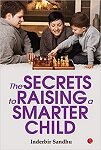
The Secrets to Raising a Smarter Child Recommended |
||||
|
Identifying Gifted Students: Who Gets Tested and WhyBy David Palmer, Ph.D As a parent, you're probably aware that many schools offer special classes or other services for kids that are identified as intellectually "gifted". But how do schools go about identifying who to test and who needs gifted program services in order to flourish? Not all bright children are gifted, and not all gifted children are so different from their peers that they need special support. For this reason, nearly all districts have developed a systematic way to screen students for such programs. There is no federal law that mandates how school districts identify gifted children, and there is no universal agreement as to what constitutes intelligence or "giftedness." Still, many districts use an individually administered IQ test as at least part of their screening process - and those that do often use the IQ score as the primary condition of placement. However flawed or controversial these tests may be, they are arguably the best tool we have to find kids who learn differently. IQ tests measure such things as problem solving skills, memory, and the ability to understand and use language - some of the same skills that are used in the classroom. It follows, then, that those who score unusually well on these tests will likely be unusual learners who need a program that is different than that provided in the most classrooms. But which kids should the schools test? One obstacle involves trying to distinguish bright, high-achieving students who may be best served in a traditional classroom from those who have such advanced abilities, and learn so differently, that they need a different kind of school experience to succeed. This distinction would be easy if all gifted children acted the same. But, of course, they don't. In fact, they are often more different from one another than they are from many of their average-ability peers.
Using a limited approach to identification, such as teacher recommendation or a review of grades or achievement test scores, just won't work. High-achieving children may be identified this way, but not the intellectually gifted. For this reason, most districts use a multifaceted approach to identification, basing the selection of children on a variety of screening methods. Each district will have a specific person or team who determines what criteria to use. Some may rate children on a point scale in several areas, including how they score on an individual IQ test, and then offer gifted program services to those receiving a certain number of points. Others use multiple screening methods largely to select children for an individual IQ test and then use the score on that test as the final criterion on which selection is made. Here are some selection criteria that many districts commonly use when selecting for gifted programs. Rating Scales: The rater will be asked to compare the child to a list of characteristics that are typically associated with gifted students. Formal Observation: Once a child has been nominated by a teacher or a parent, someone from the school or district may do a formal observation in the classroom as a way to gather further information and get an objective second opinion regarding the recommendation Input From Past Teachers: Previous teachers may be interviewed or asked to complete a rating scale, to get their perspective on the child's learning needs A Review of Past Grades or Test Scores: The child's current and past grades, scores on state achievement tests, and any other class or school-wide achievement testing will be reviewed. The district may require that a student's grades and test scores meet a certain standard for the screening process to continue. Parent Interest: At some point in the screening process a district representative will ask parents if they are interested in having their child participate in the program. Student Interest and Attitudes: A child who is being considered for a gifted program may be interviewed or asked to complete an interest survey. Placement Trials: Students may be placed on a trial basis in a classroom or group where the teacher uses the same type of learning strategies that are used by the school's gifted program teachers. Portfolio Review: Part of the process of screening for a gifted education program may include a review of the student's work samples collected over time in such portfolios. The student's work may be evaluated against the work of others for such characteristics as quality, depth, effort, and ability. Group IQ Tests: Districts will often screen large groups of children - sometimes entire grades - with a group IQ test at a predetermined time each year. For example, every October all second graders in a district will be administered a group IQ test by their teachers. Many gifted kids don't shine in school - their abilities may be masked by boredom, frustration, disorganization, or other common traits of giftedness. Group tests are often used as an objective way to identify children for further screening who may have been overlooked. Group test scores are not considered to be as reliable as individually administered IQ test scores. For this reason, a child's performance on a group test is usually not the main factor on which a gifted program placement is made. More likely, a child's score on these tests will be used in conjunction with other criteria when determining eligibility. Or the group test score will be used to determine whether a child is a good candidate to be tested with an individually administered IQ test. Your Child and the Screening Process Using the strategies outlined in this chapter, schools should be able to identify most students who would benefit from a gifted education placement, so you may not need to do anything to ensure that your child is being fairly evaluated by “the system.” Yet, there may be times when you feel that the school is missing something about your child, and you'd like to be sure that he or she is being given the same consideration and opportunities as others. Maybe you've heard from other parents that their children are being screened for the district's program, and you're thinking, “What about my kid? I know she's just as smart!" Or you find out that your child was being considered but did not "make the cut" for some reason. While you don't want to be perceived as overly protective or pushy, you also want to make sure that those making the decisions have all the information they need to truly understand your child. Some gifted children are not identified because their potential is masked by personality traits - such as shyness, low frustration tolerance, or an overly easy-going nature. Giftedness may also be hidden by a child's social and language background, or by a specific learning disability (yes, kids can be both gifted and learning disabled – these are sometimes called twice exceptional or “2E” kids). If you believe this is true in your child's case, you may want to talk with the teacher and share your thoughts. Parents and teachers are a child's most important allies and they need to keep each other informed and up to date. Each sees the child from a different perspective and each has a particular insight into a child's learning needs. As a parent, you've watched your child's development since birth. You've seen him at home, at play, with friends, and with family. You're in a good position to truly understand his specific interests, temperament, unique gifts, strengths, and limitations. The teacher, on the other hand, has had an opportunity to evaluate your child's learning style, academic skills, and social and cognitive development in comparison to a large number of other children of the same age. It doesn't take long for most experienced teachers to develop an intuitive sense of their students' strengths and needs - to evaluate how quickly they learn, the type of instruction they respond to best, and their attitudes toward school. The teacher may also help you to better understand the district's gifted education program and how it is different than what your child is already receiving. Together, you should be able to get a more complete, objective view than either of you had on your own. Maybe you'll come to realize that your child would be better off in a general education program since his learning style would not mesh with the type of curriculum being used in the district's gifted program. On the other hand, the teacher may consider taking a second look at your child in light of the extra information you have given her. Most importantly, stay focused on working together as a team to come up with ideas and solutions that will work for your child. 
Dr. David Palmer is an educational psychologist and author of the newly released Book, Parents' Guide to IQ Testing and Gifted Education: All You Need to Know to Make the Right Decisions for Your Child, available online and through Barnes and Noble and other fine book sellers.
|


 Checkout these other child development articles

|
|